How to Build Mobility for Longevity Without Complicated Workouts
I turn 60 on Monday.
That statement feels strange to write because, in many ways, I still feel like the young martial artist who thought he could train forever without consequences. For decades, I focused on strength, conditioning, endurance, and pushing my body harder. Mobility was rarely something I thought about unless I was warming up for a workout.
Today, things are different.
I still train. I still teach. I still believe physical fitness is one of the greatest investments a man can make in himself. But I've also learned something many men discover as they get older: strength means very little if you lose the ability to move well.
Over the last few years, I've noticed areas where my body naturally wants to tighten up. My hips need more attention than they used to. My shoulders don't recover quite as quickly. If I spend too much time sitting at a desk or driving, I feel it the next day.
The reality is simple.
As we age, mobility becomes more important, not less.
That's why mobility for longevity has become a major focus in my own life. I don't want to simply add years to my life. I want to remain capable during those years. I want to continue hiking, teaching martial arts, working out, serving others, and enjoying life without unnecessary limitations.
For many men, mobility isn't something they think about until they get hurt.
That's unfortunate because mobility isn't really about injury recovery. It's about injury prevention. It's about maintaining the ability to do the things you love long before pain forces you to pay attention.

Why Mobility for Longevity Matters More Than Most Men Think
Most men spend their younger years trying to become stronger.
There is nothing wrong with that.
Strength training improves health, increases confidence, helps maintain muscle mass, and supports healthy aging. In fact, I encourage nearly every man I work with to include some form of strength training in his weekly routine.
But there is a hidden problem that often develops alongside increasing strength.
Many men become stronger while simultaneously becoming stiffer.
They can deadlift impressive weight but struggle to squat deeply. They can carry heavy objects but can't comfortably reach overhead. They can push through a workout but find it difficult to get off the floor without using their hands.
The issue isn't a lack of strength.
The issue is a lack of range of motion.
Mobility refers to your ability to move a joint through its full range of motion with control and stability. When mobility declines, everyday movements begin to require more effort. Tasks that once felt natural become awkward or uncomfortable.
This is where the concept of mobility for longevity becomes important.
Longevity is not simply about living longer. Most of us know someone who lived a long life but spent many of those years struggling physically. True longevity includes maintaining quality of life, independence, and the ability to participate fully in the things that matter most.
Recently, I came across a Harvard Health article discussing research on flexibility and lifespan. Researchers followed more than 3,000 adults over a thirteen-year study period and discovered a significant relationship between flexibility scores and mortality rates.
The findings were fascinating.
Individuals with lower flexibility scores were more likely to die during the study period than those with higher scores.
Now, flexibility itself is probably not the direct cause. Stretching alone is not some secret fountain of youth. However, the findings support what many fitness professionals have observed for years: people who move well tend to stay active longer, experience fewer limitations, and maintain healthier lifestyles as they age.
When your joints move properly, you are more likely to stay physically active.
When you stay physically active, you are more likely to maintain muscle mass, balance, cardiovascular health, and overall function.
Everything works together.
That is why mobility should never be viewed as an optional add-on to fitness. It should be viewed as part of the foundation.

The Real Reason Most Men Lose Mobility
Most men assume stiffness is a natural consequence of getting older.
There is some truth to that. Our bodies change as we age. Recovery takes longer. Connective tissues become less elastic. Joints may become less forgiving.
But age is rarely the whole story.
In my experience, the bigger issue is inactivity.
Think about how most men spend their day. They sit while driving. They sit at work. They sit during meals. They sit while watching television in the evening.
Then they wonder why their hips hurt.
The human body adapts to whatever we ask it to do repeatedly. If we sit for years, our bodies become exceptionally good at sitting. Unfortunately, they become less capable of performing many of the movements we actually need for life.
Proverbs 24 speaks about a field that became overgrown because of neglect.
The owner didn't ruin it overnight. He simply failed to maintain it.
Mobility often declines the same way.
The process is gradual.
You lose a little range of motion this year. A little more next year. Then one day you realize you can no longer move the way you once did.
The encouraging news is that the opposite is also true.
Small acts of maintenance performed consistently can produce remarkable results over time.
How Mobility Protects You From Injury
One lesson I've learned after decades in martial arts is that injuries often begin long before pain appears.
The pain is usually the final chapter of a story that has been developing for months or even years.
When a joint loses mobility, the body finds another way to complete the movement. At first, those compensations seem harmless. Eventually, they create stress where stress was never intended to go.
A stiff ankle can contribute to knee pain.
Restricted hips can contribute to lower back problems.
Limited shoulder mobility can lead to neck tension and shoulder injuries.
The body is interconnected.
That is why mobility training is not simply about becoming more flexible. It is about preserving healthy movement patterns so your body can continue doing what it was designed to do.
As I approach 60, I think less about personal records and more about sustainability.
I want to be able to train ten years from now.
I want to hike ten years from now.
I want to continue getting on the floor with grandchildren someday and get back up without making a production out of it.
Mobility supports that future.
Simple Ways to Improve Mobility Without Complicated Workouts
One of the biggest misconceptions in the fitness world is that everything must be complicated.
It doesn't.
Many men avoid mobility work because they think it requires hour-long stretching sessions or advanced yoga routines. In reality, most people can experience meaningful improvements with just a few minutes each day.
The key is consistency.
I would rather see a man spend ten minutes daily on mobility than spend an hour stretching once every two weeks.
Small investments made consistently always outperform heroic efforts made occasionally.

Start the Day With Movement
One of the easiest habits I've adopted is moving before diving into the day's responsibilities.
A few minutes of gentle movement helps wake up the body and improve circulation. It also reminds your joints that they were designed to move.
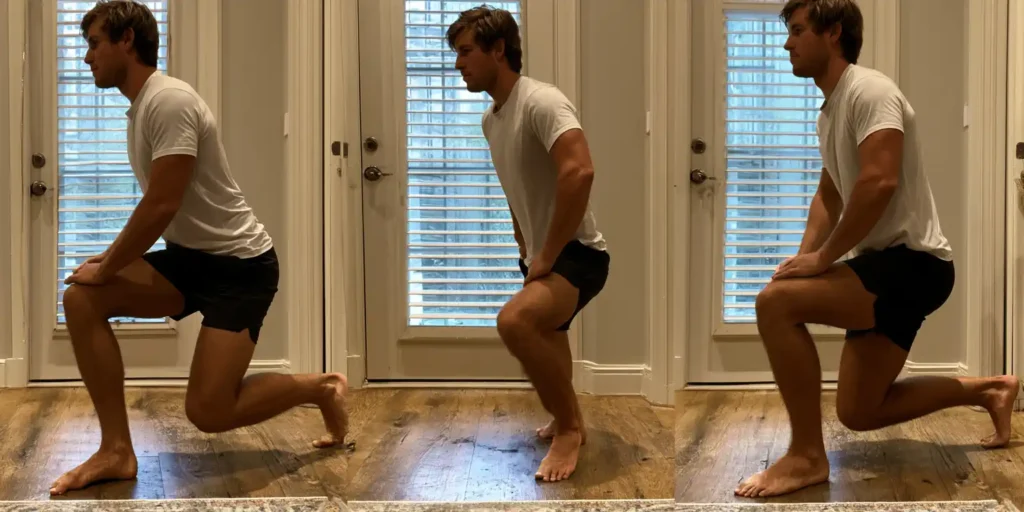
Simple movements like shoulder circles, hip rotations, bodyweight squats, and spinal twists can make a significant difference when practiced regularly.
Walk More Than You Think You Need To
Walking remains one of the most overlooked tools for healthy aging.
It costs nothing. It requires no special equipment. It improves circulation, joint health, recovery, and overall physical activity levels.
Many mobility problems improve when people simply move more throughout the day.
Walking won't solve everything, but it solves more than most people realize.
Spend More Time on the Floor
This may sound unusual, but spending time on the floor can reveal a great deal about your mobility.
Can you sit comfortably on the floor?
Can you transition between positions?
Can you stand back up without assistance?
These simple movements challenge multiple joints at the same time and help maintain the kind of movement capacity that supports independence later in life.
Address Your Weak Links
Every man has areas that need extra attention.
For some men, it is their hips. For others, it is their shoulders, ankles, or thoracic spine.
You don't need twenty different mobility drills.
You need a handful of exercises that target your most restricted areas and a commitment to perform them consistently.

Mobility Is Really About Capability
When most people hear the word longevity, they think about lifespan.
I think about capability.
Living longer matters.
Living well matters more.
I don't want to spend my later years watching life from the sidelines. I want to participate. I want to remain useful. I want to continue serving my family, my community, and the people God places in my path.
Mobility supports all of those goals.
As Christian men, we often talk about stewardship in terms of money, time, and spiritual gifts.
Those things matter.
But stewardship also includes caring for the body God has entrusted to us.
Paul reminds us in 1 Corinthians 6:19-20 that our bodies belong to God. That truth should influence how we train, how we recover, and how we care for ourselves over the long term.
The goal is not physical perfection.
The goal is faithfulness.
Questions Worth Asking Yourself
As I prepare to turn 60, I've found myself asking a few important questions.
Perhaps they are worth asking yourself as well.
- Can I move as well as I should for my age?
- Am I maintaining my body or merely reacting to pain?
- Have I accepted stiffness as normal when it may actually be preventable?
- What physical limitations am I creating through neglect?
- If my current habits continue for the next ten years, where will I end up?
These questions are not meant to create guilt.
They are meant to create awareness.
Awareness is often the first step toward positive change.
Final Thoughts
The older I get, the more I appreciate the value of simple things.
Consistent movement.
Daily walks.
Stretching tight areas.
Taking care of the body God has given me.
None of these practices are exciting. None of them will generate headlines. None of them require expensive equipment or complicated programs.
But they work.
If you're looking to improve mobility for longevity, start small.
Commit to ten minutes a day.
Move your joints through their full range of motion.
Walk more.
Sit less.
Stay consistent.
Your future self will thank you.
And perhaps more importantly, you'll be better equipped to continue serving God, loving your family, and living the life you've been given for many years to come.

Ready to Take Your Health More Seriously?
Reading about mobility is a good start.
Taking action is what creates change.
If you're realizing that your mobility, fitness, energy levels, or overall health need more attention, you don't have to figure it out alone. Whether you're trying to move better, lose weight, build strength, improve your habits, or simply stay capable as you age, having a plan makes all the difference.
I work with Christian men who want to become stronger stewards of the bodies God has entrusted to them. The goal isn't perfection. The goal is building sustainable habits that help you stay healthy, active, and capable for years to come.
If you're ready to get serious about your health and fitness, learn more about my coaching and mentorship options here:
👉 https://christianvictory.ca/physical-discipline/
Your future health is being shaped by the choices you make today. Start building the foundation now so you can continue serving God, loving your family, and living with strength and purpose in the years ahead.

Train your hands. Strengthen your spirit.
This design is built for men who don’t separate faith from discipline. Psalm 144:1 isn’t decoration—it’s a reminder that strength is trained, not assumed.
Carry what you believe. Every day.
Get your Case TodayRecently, I came across a Harvard Health article discussing research on flexibility and lifespan. According to Harvard Health's review of the research , researchers found a significant relationship between flexibility scores and mortality rates over a 13-year study period.
You could also add a brief "Further Reading" section near the end:
Further Reading
If you'd like to explore the research behind flexibility and longevity, I recommend reading:
Greater Flexibility Linked With Longer Lives – Harvard Health Publishing
Discover more from Christian Victory
Subscribe to get the latest posts sent to your email.